
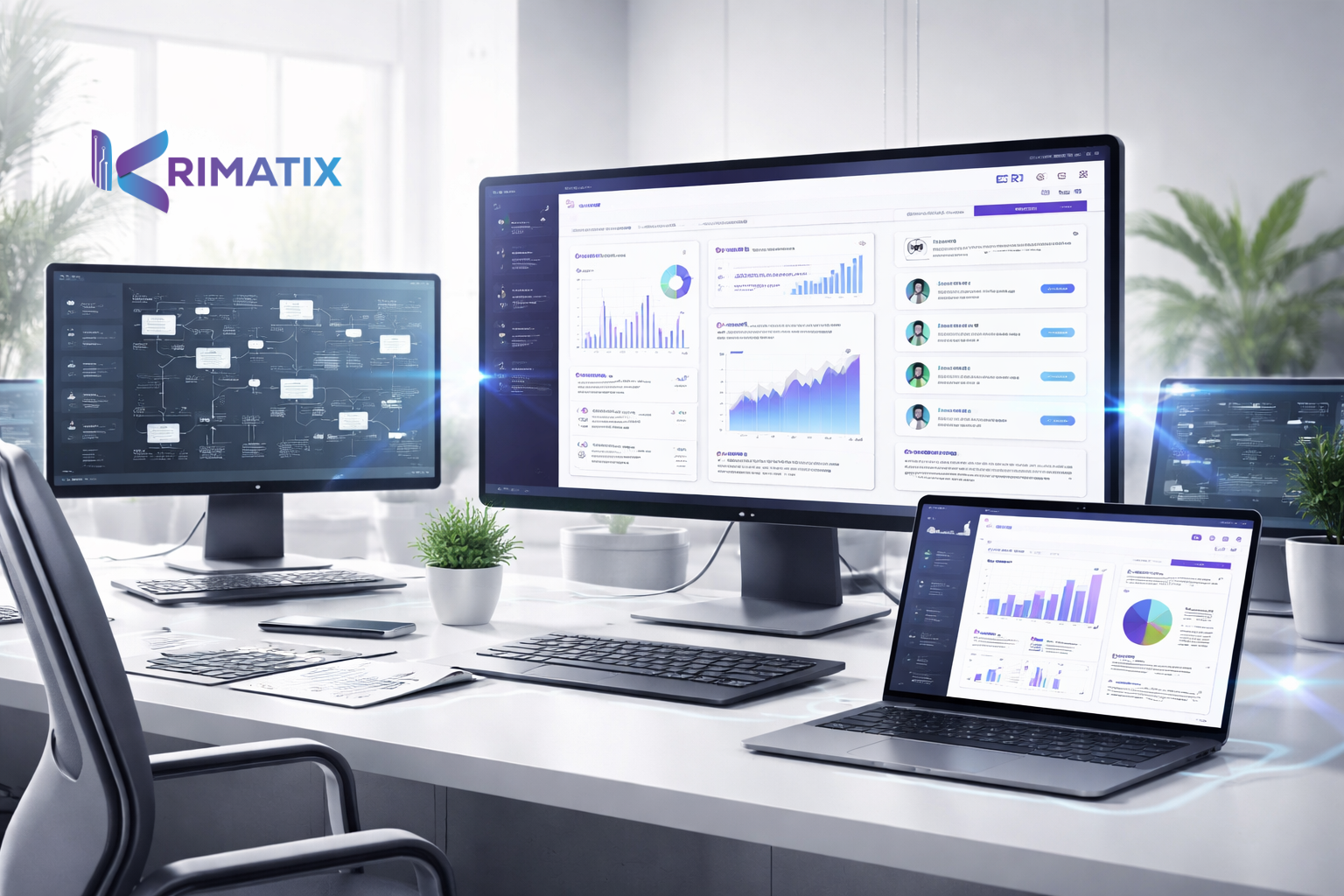
Benefits of custom software development are becoming essential for businesses aiming to scale efficiently in 2026. From automation and flexibility to long-term cost savings, custom software helps organizations overcome the limitations of generic tools and build solutions tailored to their workflows.
If you're comparing solutions, read our guide on custom software vs SaaS to understand which option fits your business growth:
https://krimatix.com/blogs/custom-software-vs-saas-which-is-better-for-growing-businesses/
Benefits of Custom Software Development: Overview
Understanding the benefits of custom software development helps businesses make better technology decisions. Unlike off-the-shelf solutions, custom software is built to match your processes, allowing better efficiency, scalability, and control.
As businesses grow, relying on generic tools often leads to inefficiencies, disconnected systems, and limited scalability. Custom software solves these problems by providing a solution that evolves with your business.
What Is Custom Software Development?
Custom software development refers to building software applications tailored to specific business requirements. Unlike generic solutions, custom software is designed to align with your processes, integrations, and growth plans.
These solutions are not limited by predefined features. Instead, they are built based on your exact operational needs.
Examples include:
- Custom CRM systems
- Business process automation tools
- Enterprise workflow systems
- Customer dashboards and portals
- Industry-specific SaaS platforms
Benefits of Custom Software Development for Businesses
1. Tailored to Business Needs
Custom software is built specifically around your workflows. This eliminates unnecessary features and ensures that every function serves a purpose, improving productivity and efficiency.
2. Scalability and Flexibility
One of the biggest benefits of custom software development is scalability. As your business grows, your software can evolve with new features, integrations, and capabilities without limitations.
3. Improved Business Efficiency
Automation of repetitive tasks reduces manual work and minimizes human error. This improves operational efficiency and allows teams to focus on high-value activities.
👉 To understand how efficiency impacts growth, read:
https://krimatix.com/blogs/digital-marketing-for-small-business-leads-sales/
4. Seamless Integration
Custom software integrates easily with your existing systems such as CRM, ERP, analytics tools, and payment platforms. This creates a unified ecosystem and eliminates data silos.
5. Enhanced Security
Custom-built applications provide better control over security features. Unlike widely used software, custom solutions are less vulnerable to common attacks.
6. Long-Term Cost Efficiency
Although custom software requires an upfront investment, it eliminates recurring subscription costs and reduces inefficiencies, making it more cost-effective over time.
7. Competitive Advantage
Custom software allows businesses to create unique features and workflows that competitors cannot easily replicate. This leads to better customer experience and stronger market positioning.
Custom Software vs Off-the-Shelf Software
Off-the-shelf software is designed for general use and often forces businesses to adjust their workflows. This can lead to inefficiencies and limitations.
Custom software, on the other hand, is built specifically for your operations.
Off-the-shelf software:
- Limited customization
- Recurring licensing costs
- Integration challenges
Custom software:
- Fully tailored solutions
- Scalable and flexible
- Better system integration
For growing businesses, custom software becomes the better long-term solution.
When Should Businesses Choose Custom Software?
Businesses should consider custom software development when:
- Existing tools no longer meet requirements
- Teams rely heavily on manual processes
- Multiple systems are disconnected
- Business is scaling rapidly
- Industry-specific features are needed
These situations clearly indicate the need for a tailored solution.
Common Use Cases for Custom Software
Custom software is widely used across industries for:
- Business process automation
- Enterprise workflow management
- Inventory and logistics systems
- SaaS product development
- AI-powered analytics dashboards
- Customer portals and internal tools
These applications help businesses improve productivity, reduce costs, and enhance decision-making.
How Custom Software Supports Business Growth
The benefits of custom software development go beyond operations. It directly impacts business growth by enabling better scalability, automation, and efficiency.
Custom software allows businesses to:
- Scale operations without system limitations
- Automate complex workflows
- Improve customer experience
- Make data-driven decisions
👉 For growth strategies, explore:
https://krimatix.com/blogs/lead-generation-strategies-for-small-business/
Conclusion
The benefits of custom software development make it a powerful solution for growing businesses. From scalability and automation to improved efficiency and security, custom software enables organizations to build systems that align with their long-term goals.
Instead of adapting to generic tools, businesses can create solutions tailored to their needs, resulting in better productivity and competitive advantage.
Ready to Build Custom Software for Your Business?
If your business is facing limitations with generic tools or inefficient workflows, custom software can transform your operations.
Krimatix helps businesses build scalable and secure custom software tailored to their needs.
👉 https://krimatix.com/
👉 Contact our team for a consultation